
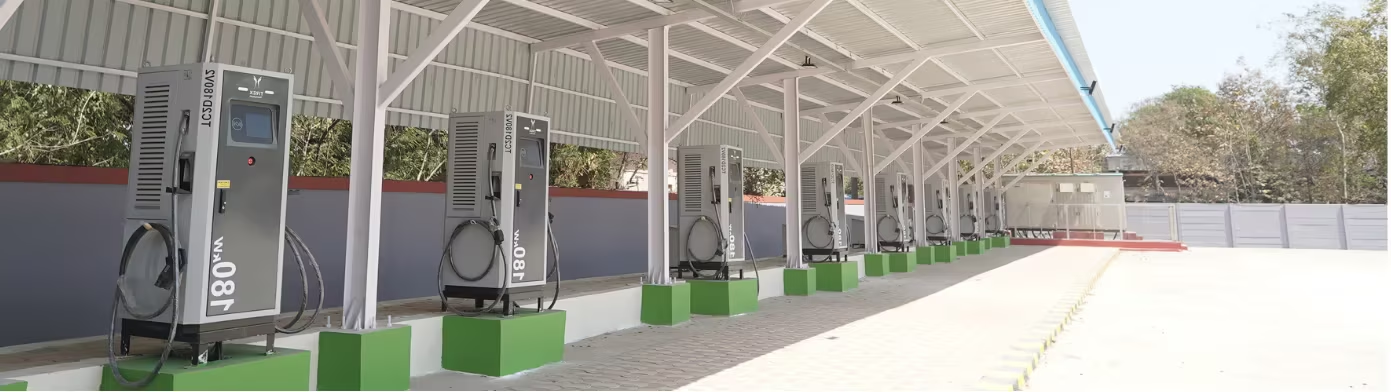
Electric bus charging
Electric bus charging infrastructure
E-bus depot charging built end to end: civil works, power connection, transformers, high-power DC chargers, sheds and safety systems.
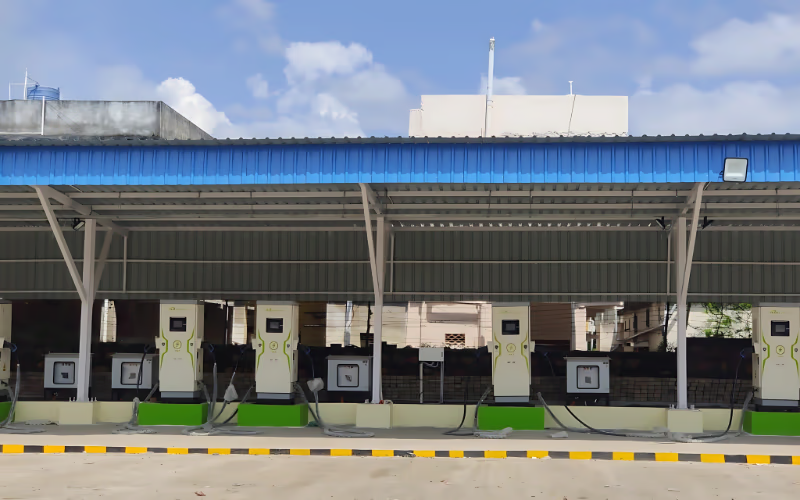
Civil works
Depots built from the ground up
Depot charging starts on the ground. At Chandrapur we built the site from scratch to support electric bus operations.
- Site preparation: land leveling, excavation, column footing and casting
- Charging bays & sheds: platforms, sheds and wheel stoppers for each bay
- Cable trenches: organised trench networks for safe power routing
- Depot buildings: admin building and an e-bus workshop, plus service roads and paver blocks
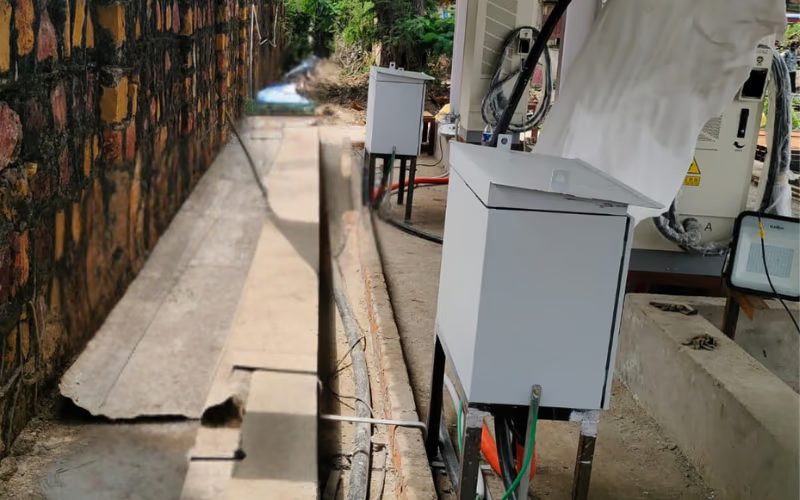
Power
Power & electrical infrastructure
High-power bus charging needs a strong, protected power supply.
- HT connection & RMU: ring main units and HT terminations for a reliable grid connection
- Transformers & substations: compact substations and transformers, such as the 500 kVA transformer at Solapur
- Distribution: AC distribution boards (17 ACDB units at Chandrapur) and LT cabling to every charger
- Safety: earthing systems and lightning arrestors, as at both Burari depots
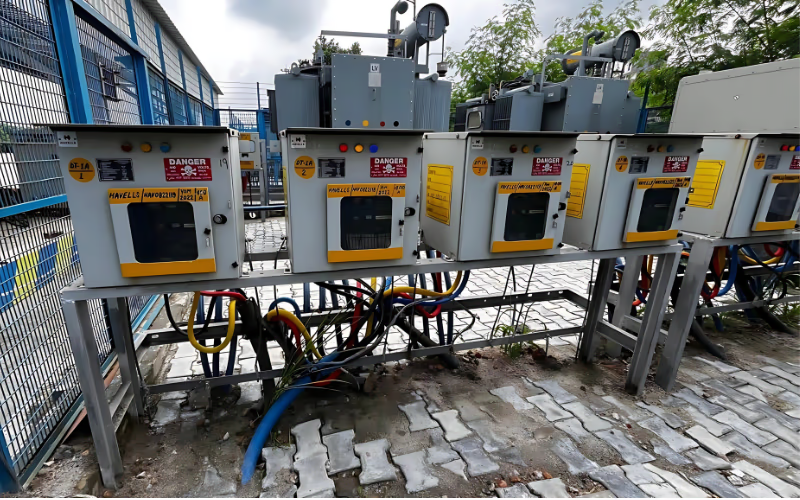
Chargers
High-power DC chargers
We supply, install and commission chargers sized for the fleet and its schedule, including Hylif-manufactured chargers for buses.
- 180 kW DC chargers: 11 at Chandrapur and 3 at Solapur, Maharashtra
- Large depots: 19 chargers at Burari Depot 1 and 20 at Depot 2, Delhi
- Multi-site rollouts: 25 chargers across Pal, Bhestan 1 and Bhestan 2, Surat
- After handover: monitoring and preventive maintenance by our O&M team
Projects
Depot projects by region
Delhi NCR & Haryana
Burari, Rohini, Panchkula, Karnal and Yamuna Nagar.
Learn more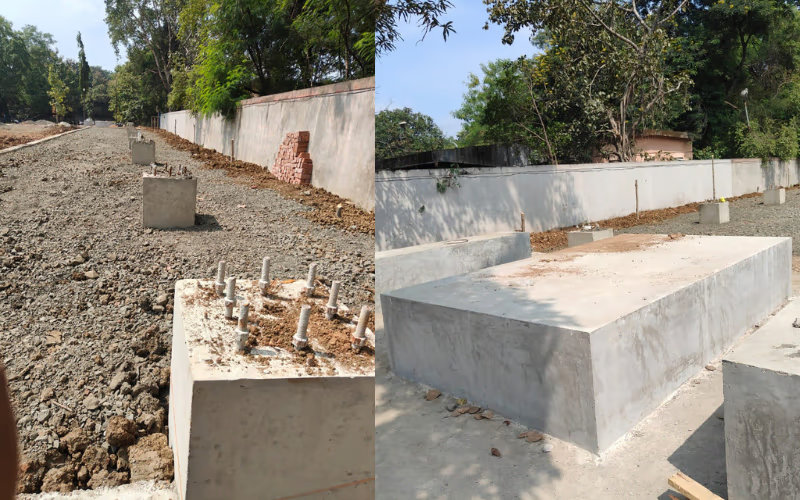
Maharashtra
Chandrapur, Bhandara and Solapur depots.
Learn more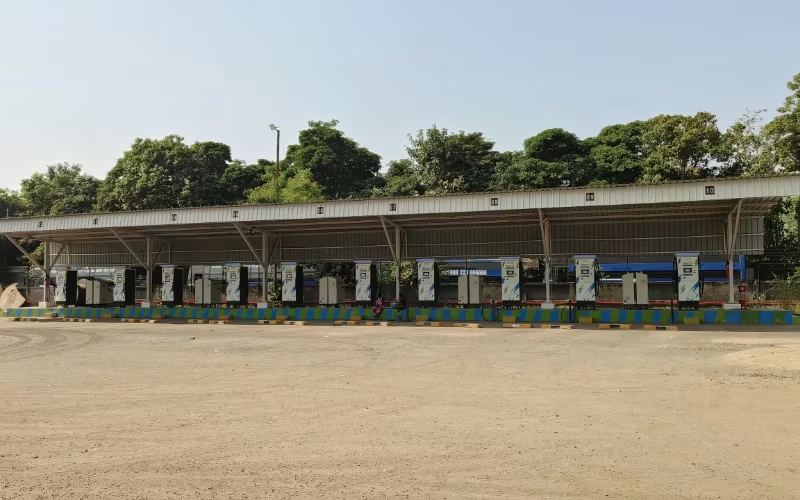
Gujarat
Pal, Bhestan 1 and Bhestan 2 in Surat.
Learn more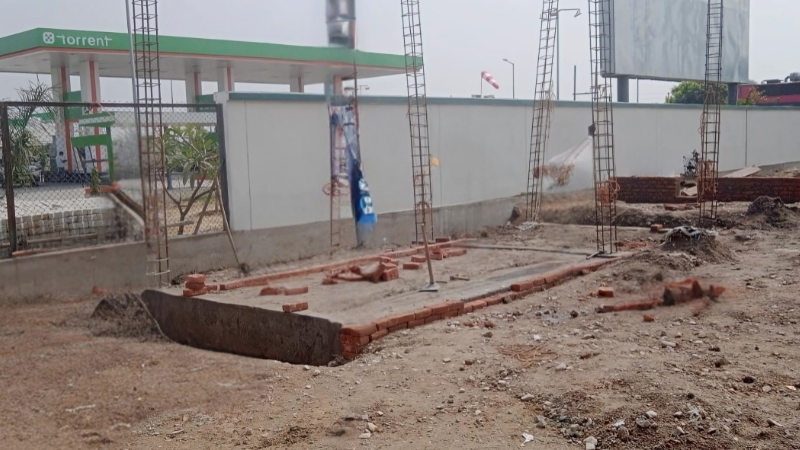
Uttar Pradesh
Public charging for buses, cars and two-wheelers.
Learn moreFAQ
Frequently asked questions
What does an electric bus depot need for charging?
A reliable HT power connection, transformers or compact substations, distribution boards, high-power DC chargers, cabling, earthing and lightning protection, and civil works such as charging bays, sheds and cable trenches.
What charger power is used for electric buses?
Depot charging commonly uses high-power DC chargers. Several of our depot projects use 180 kW DC chargers.
Does Hylif handle both civil and electrical work?
Yes. We deliver civil works, electrical infrastructure, charger supply and installation, testing and commissioning, and ongoing operation and maintenance.
Where has Hylif built bus charging depots?
Projects include Burari and Rohini in Delhi; Chandrapur, Bhandara and Solapur in Maharashtra; Surat in Gujarat; Panchkula, Karnal and Yamuna Nagar in Haryana; Nizamabad and Karimnagar in Telangana; and Berhampur in Odisha.
Planning an electric bus depot?
Share your fleet size and site details and we will plan the charging infrastructure.